Disability Benefits and Incarceration: How Incarceration Impacts Benefits
Posted on March 9, 2026 by Bea Bany in Blog, Disability Benefits.
Do you know how incarceration impacts Social Security benefits? This article is the first in our series on incarceration and disability benefits. Keep reading to learn what to expect when someone receiving Social Security benefits is justice-impacted.
What happens to disability benefits when someone goes to jail or prison?
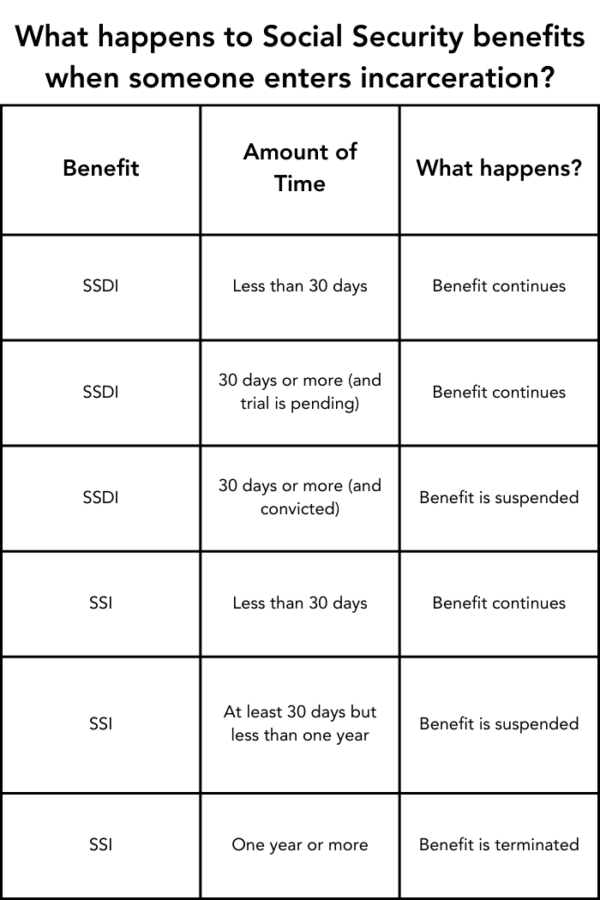
What happens to someone’s benefits while they are in jail or prison depends on how long they are incarcerated and which benefit they receive. If you receive SSDI or SSI and are incarcerated for less than 30 days, your benefit will continue. Your benefit will also continue if you receive SSDI and are incarcerated for more than 30 days but have not yet been convicted of a crime. If you are convicted and remain incarcerated for at least 30 days, your SSDI benefit will then be suspended until you are released from the jail or prison. If you receive SSI and are incarcerated for at least 30 days but less than one year regardless of if you’ve been convicted or not, your SSI benefit will be suspended. If you receive SSI and are incarcerated for one year or longer, your SSI benefit will end.
If you receive SSDI and have dependents (like a spouse or children) who also receive benefits based on your work record, their benefits will continue even if your SSDI is suspended.
What does it mean if benefits are suspended?
When someone’s Social Security benefits are suspended, it means that they are still entitled to benefits, but they are not eligible to receive a payment. People may not be eligible to receive a payment for a number of reasons, including their earnings from work are too high or they are incarcerated. When benefits are suspended, beneficiaries will need to reach out to Social Security and ask to have their benefits start again as soon as the reason for the suspension ends (like being released from incarceration). If your benefits are suspended and you need them back after being released from incarceration, stay tuned for our next article on Disability Benefits and Incarceration as it will walk you through what you need to do.
What does it mean if benefits end?
If you’re incarcerated for one year or more and your SSI ends, that means that you’re no longer eligible for or entitled to a benefit. Social Security refers to this as termination. Once you are released, you can submit a new SSI application as long as you still have a disability and a low or no income.
If you know you’re going to jail or prison, it’s a good idea to call Social Security and let them know. If you’re not able to tell Social Security beforehand, that’s okay. The jail or prison can tell Social Security you’re there. If Social Security doesn’t know a beneficiary is in jail or prison, they may continue to issue monthly payments the beneficiary is not eligible for, which can result in an overpayment.
If you have been affected by the justice system and need help accessing or understanding disability benefits, a Financial Coach at Northwest Access Fund can help!